The Thin Red Line
I met Maya several years ago when I was shooting her senior fashion show collection at CCAD. When she me post some images from my trauma series she reached out and asked to participate...
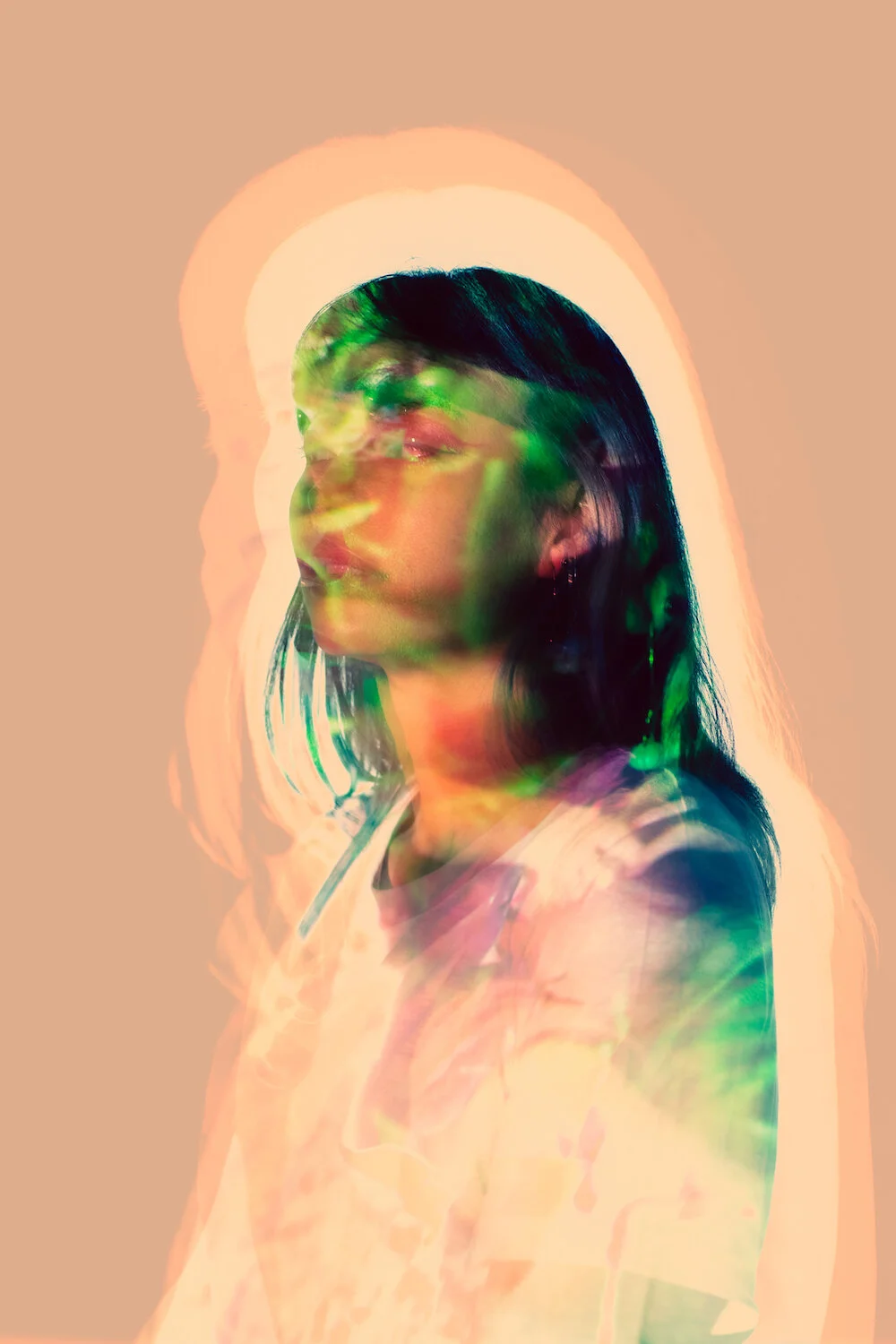
I met Maya several years ago when I was shooting her senior fashion show collection at CCAD. When she me post some images from my trauma series she reached out and asked to participate. As I did in the other sessions I asked her to bring a number of photos that represented her trauma to the shoot, which I loaded onto my computer and projected onto her, and made a number of multiple exposures. I enjoyed some of the individual frames in additional to the final multiple exposure, and included a few of them below.
Being the creative designer that she is, she also came to the shoot with some of her personal designs and ideas. She works a lot with red string in her work and told me that it represents “how we are all invisibly connected to each other and how we impact people’s lives.” A thin red line is also used by military and rescue personnel to represent the last line of courage that is mustered when protecting others. I thought that this had obvious metaphor worked well with the theme of trauma, self-protection, and survival. I thought it’d be cool to shoot a few frames of the string and then project it onto her to marry the visual approach of the first set. My favorite moment is when the fibers of the thread fall on her face, looking like blood vessels.
Print Sale
Print sale! I have a bunch of 8x10” prints that need a new home. $50 shipped (US only)…
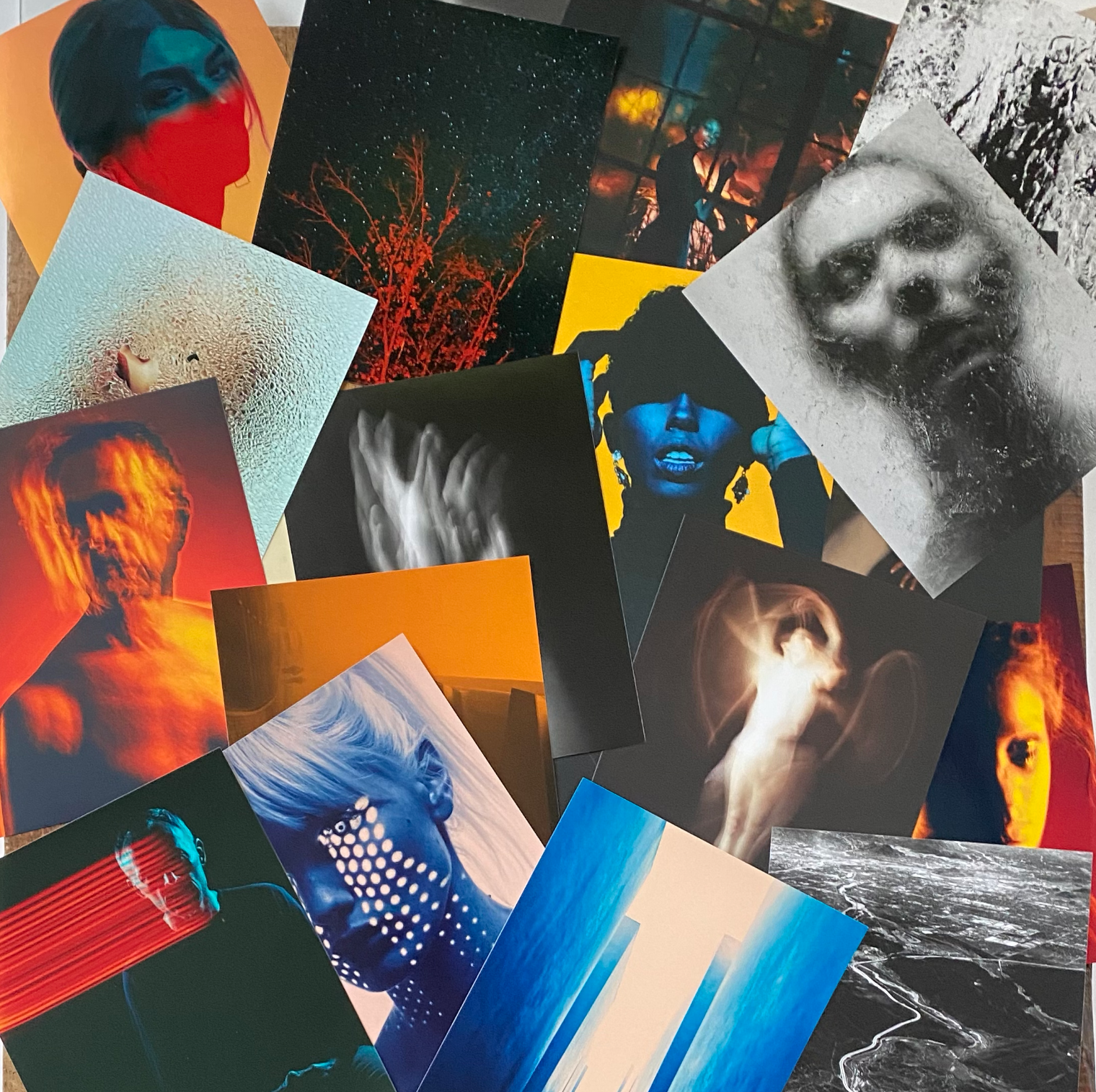
Print sale! I have a bunch of 8x10” prints that need a new home. $50 shipped (US only). Payment accepted through Venmo or PayPal. Comment below or email me if you want one (include a screen cap or description of which image you want). First come first served.
Liquid Color
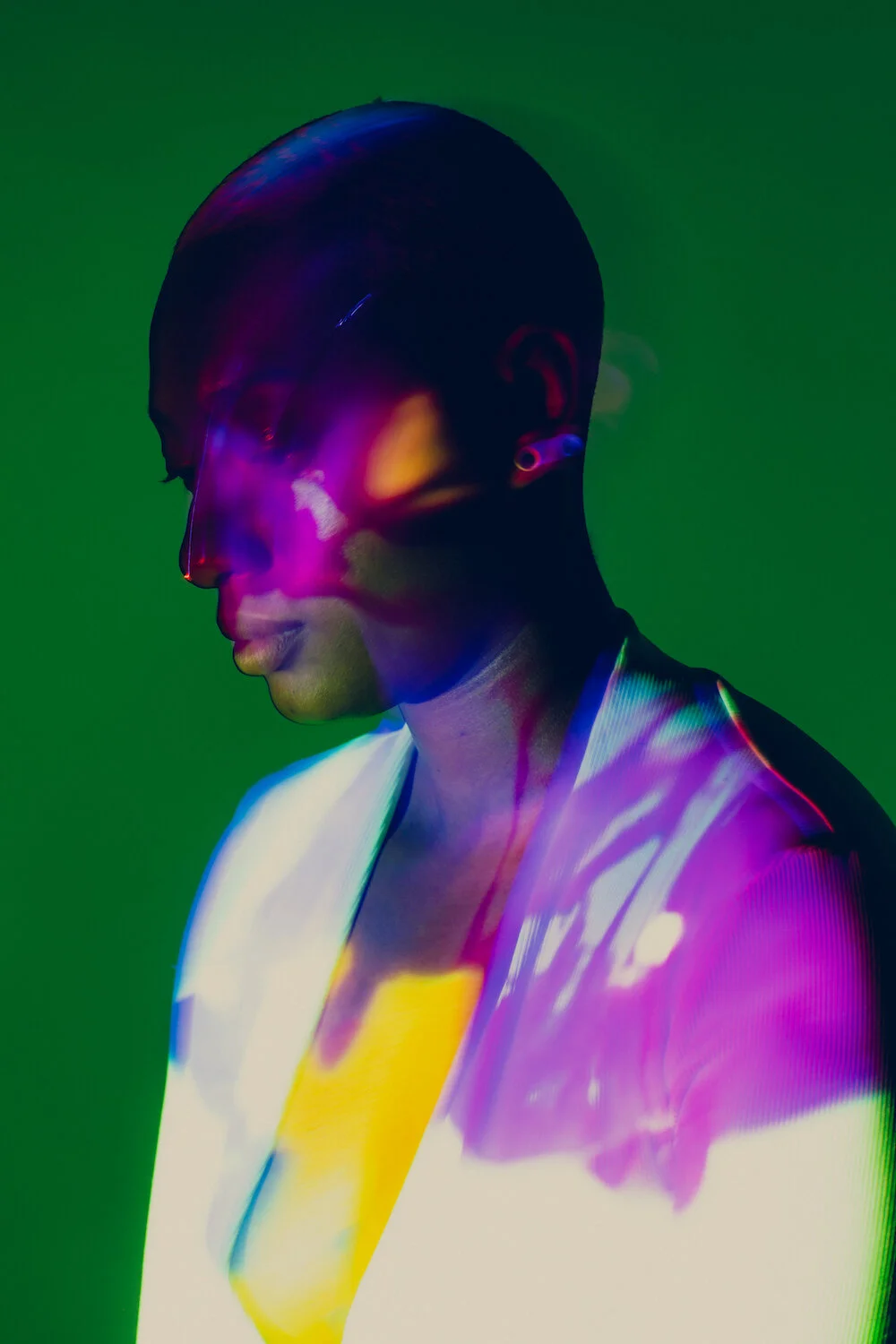
This was a fun little test shoot with Jona. For some of the frames I projected video footage onto her and made multiple exposures. Other frames I used a pulsing, multicolored LED and had Jona do the moving. There was an element of control and chaos in each scenario, and all of them led to discovery and delight.
Wilted Flowers, Crumpled Leaves, and Other Pretty Dead Things
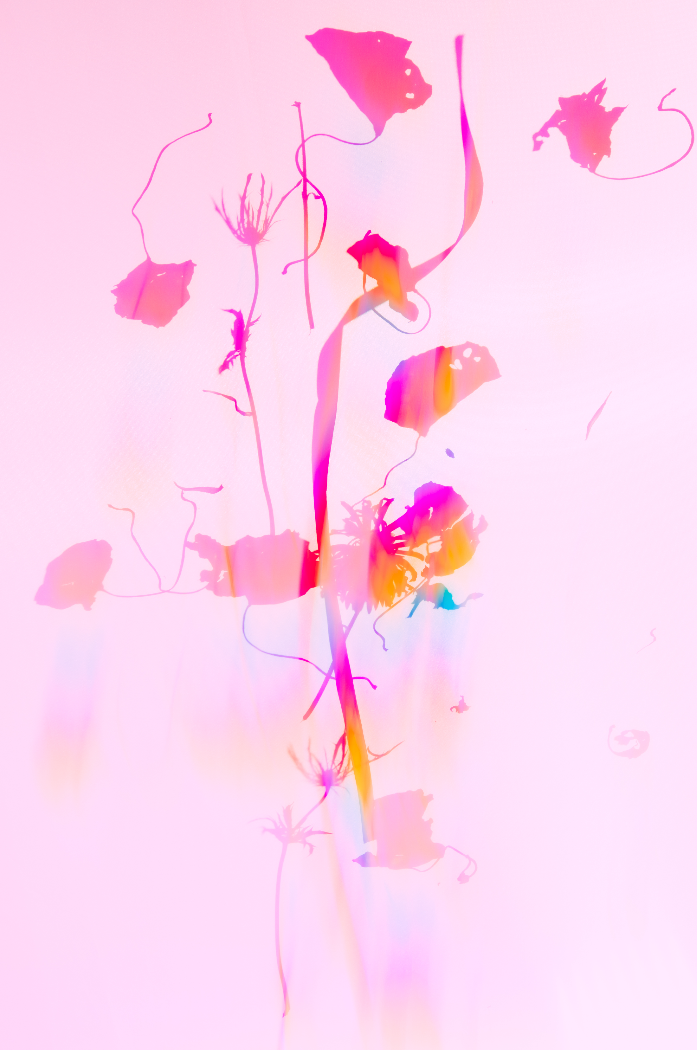
We had a bouquet of flowers on our dining room table for the last two weeks, and it had been dead for easily half that time. When I finally got around to tossing the dead flowers I caught myself and decided instead to bring them to my studio to photograph. Though I’ve been photographing flowers and plants for years I’ve never thought to document them after their prime. I added in some dead leaves from one of our ailing house plants to round out my decay study. I enjoyed these studies so much that I may begin a new series around it.
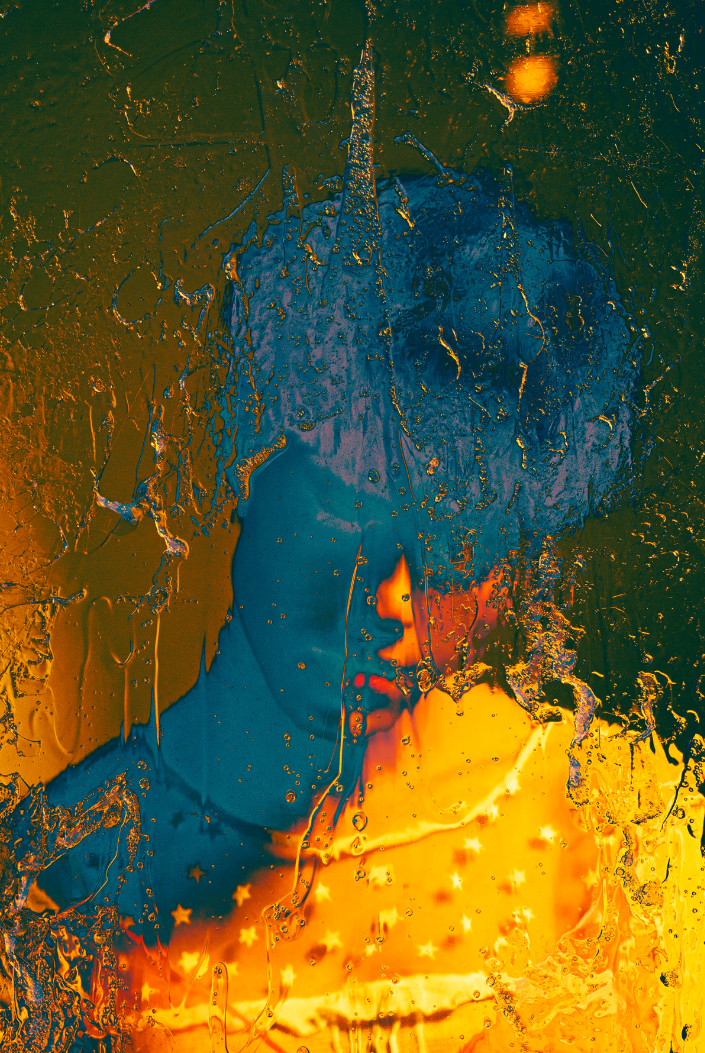
Strata VIII
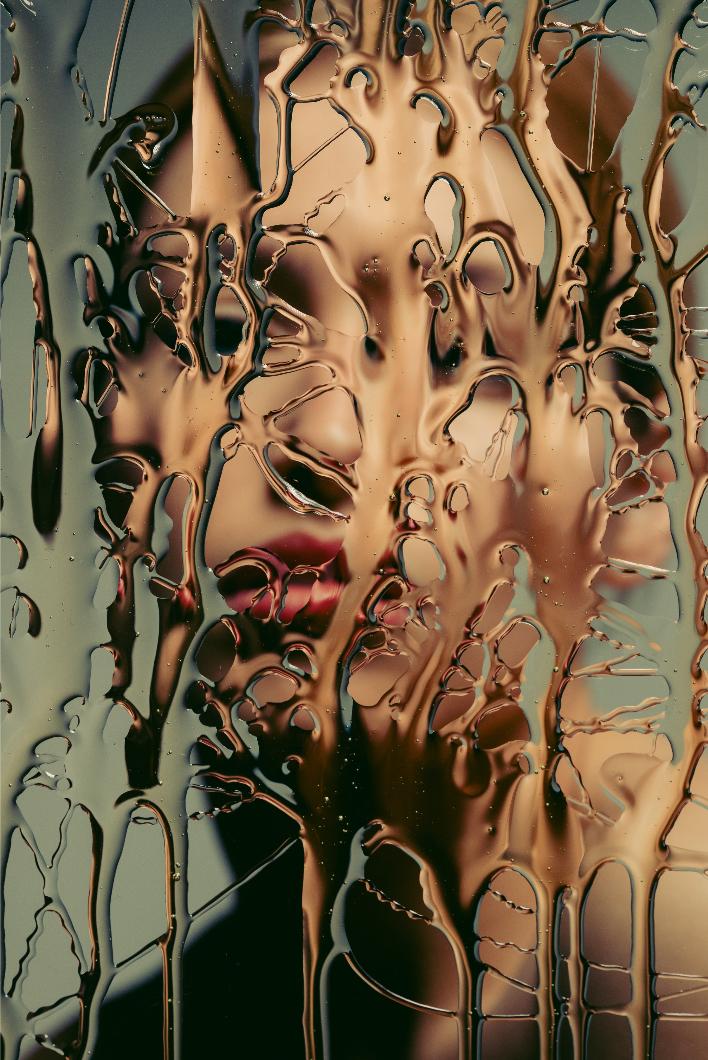
I’ve shot with rubber cement half a dozen times now, each time slightly changing not only how I apply the material to the plexiglass but also how I light it and process the images in post. Though I’m getting closer to what I’m going for in this series, there are still so many variables to explore with this material. Over the past year I’ve experimented with shooting through a range of substances and materials to get more painterly or sculptural results, titling the series Strata. You can view my other texture explorations here.
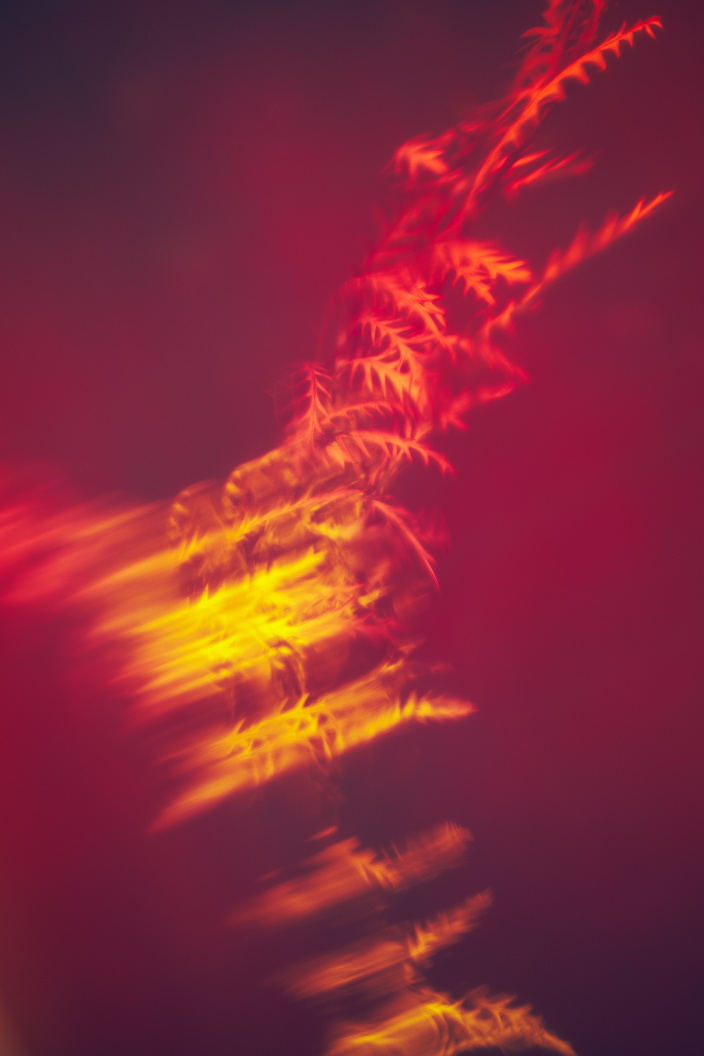
Gilding Lilies
I’ve never been especially fond of flowers. Don’t get me wrong— they’re pretty and everything, but I don’t stop to smell them, much less know their names. That said, flowers make wonderful subjects. They sit nice and still and always put on a great performance as I take my time fiddling around with lights, gels, and camera settings. Though I suppose any inanimate object would suffice for testing, I find flowers to have a human-like qualities to them. They have a face, a neck, and elegance for days. That’s not to say they’re an easy subject. They don’t bring anything to the table, save for their looks. They don’t have a range of dramatic poses or expressions or wardrobe changes. When working with flowers as a subject you only get out of a shoot what you put into it…
I’ve never been especially fond of flowers. Don’t get me wrong— they’re pretty and everything, but I don’t stop to smell them, much less know their names. That said, flowers make wonderful subjects. They sit nice and still and always put on a great performance as I take my time fiddling around with lights, gels, and camera settings. Though I suppose any inanimate object would suffice for testing, I find flowers to have a human-like qualities to them. They have a face, a neck, and elegance for days. That’s not to say they’re an easy subject. They don’t bring anything to the table, save for their looks. They don’t have a range of dramatic poses or expressions or wardrobe changes. When working with flowers as a subject you only get out of a shoot what you put into it.
I’ve developed many of my lighting and camera techniques by testing with flowers. If I want to learn how to properly blend an out of focus frame with a sharp frame, for example, I fine tune the process first with a flower. If I want to wrap my mind around a new sheet of reflective, prismatic window film that I recently purchased, the ever-patient presence of a flower affords me the space I need to learn it. The one task I give myself when working with flowers as a subject is to try and capture them in a way that surprises myself. I don’t want to limit myself by making sure to retain their natural appearance. It’s this exercise that always leads to discovery.
One Man's Trash...
This marks my third shoot with Melissa this year. Though she now lives in NYC, she was in town for the holidays and asked if I’d be interested in doing a plastic-themed shoot. In preparing for the shoot sent me a few images from a recent Vogue Portugal fashion story that implemented single-use plastics into their shoot. I really enjoyed how they repurposed trash into the creation of something new and beautiful. I knew that I would want to take a different approach to the idea by capturing the texture of the materials and experimenting with creating more abstract portraits, and so I asked Melissa to “rescue” a range of plastic from her life over the next week and bring a range of options with her to the shoot…
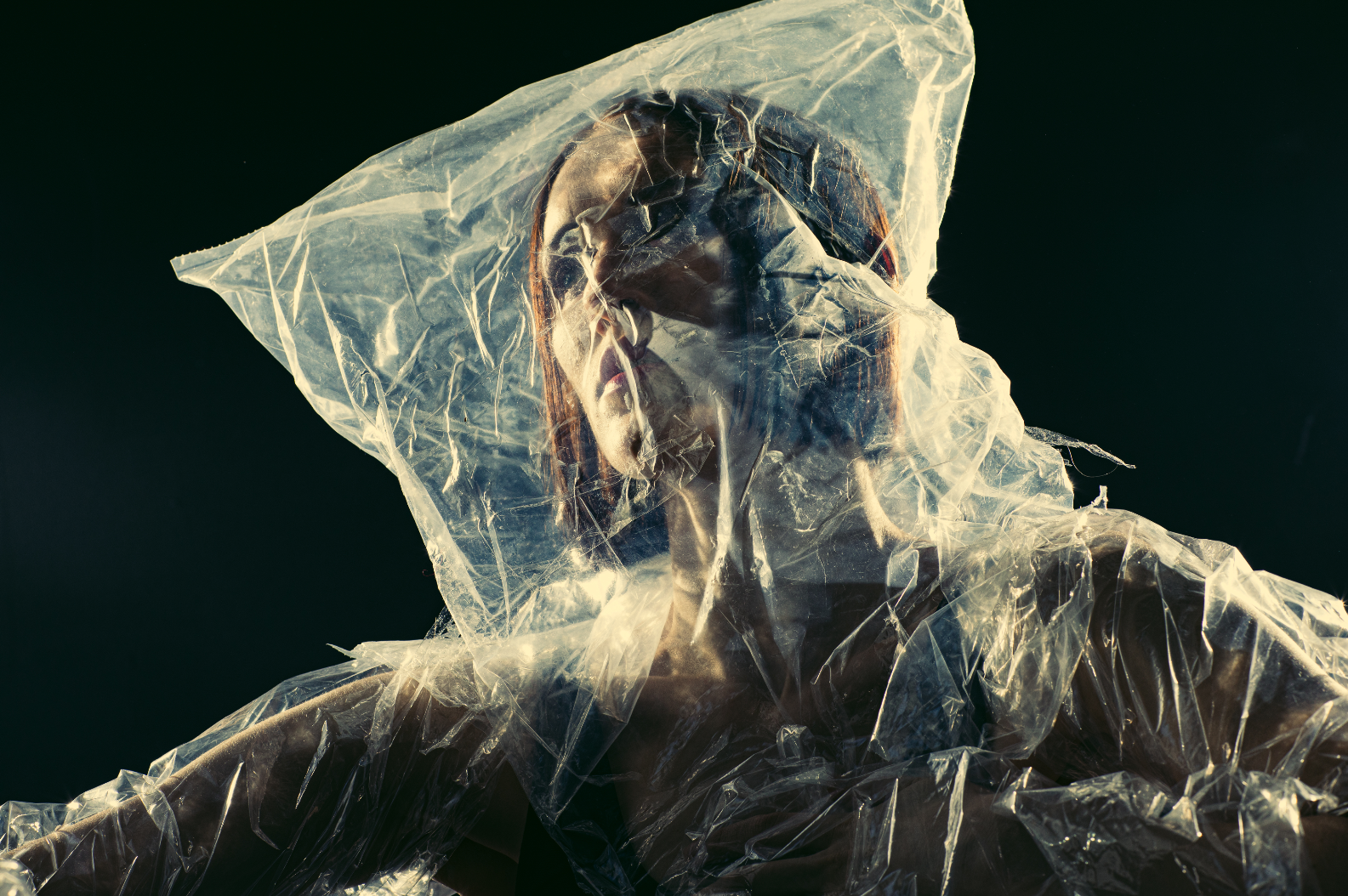
This marks my third shoot with Melissa this year. Though she now lives in NYC, she was in town for the holidays and asked if I’d be interested in doing a plastic-themed shoot. In preparing for the shoot sent me a few images from a recent Vogue Portugal fashion story that implemented single-use plastics into their shoot. I really enjoyed how they repurposed trash into the creation of something new and beautiful. I knew that I would want to take a different approach to the idea by capturing the texture of the materials and experimenting with creating more abstract portraits, and so I asked Melissa to “rescue” a range of plastic from her life over the next week and bring a range of options with her to the shoot.
Melissa didn’t disappoint, and brought items like a trash liner from her office, plastic sleeves that once contained clothing purchased online, and bubble wrap. I decided to shoot them in front of a black background, really highlighting the material with the lighting. I love the atmosphere that the plastics created.
After working with these three very different types of plastic and seeing vast potential in the range of results I got from each item, I thought that this would make a fantastic ongoing photo series. For each session I plan on having my subjects bring with them otherwise discarded trash that we will reuse to make into new treasures. I love how each item will be unique, and have a personal relationship with the subject. I love not knowing ahead of time just what I will be given to photograph. Most importantly, I love how this brings attention to the excessive waste that we create and consume on a daily basis.
Creative Portraiture Workshop Tour
I am excited to announce that I am doing a 3-city tour of my Creative Portraiture workshop in January! These are two-day, hands-on workshops that focus on creating experimental and innovative imagery. Students will work with a range of models to create both “studio” and environmental portraits. There is currently an early bird discount running until the end of November. For more information go to https://www.nickfancher.com/workshops. I’m excited to make art with you!
Time and Temperature
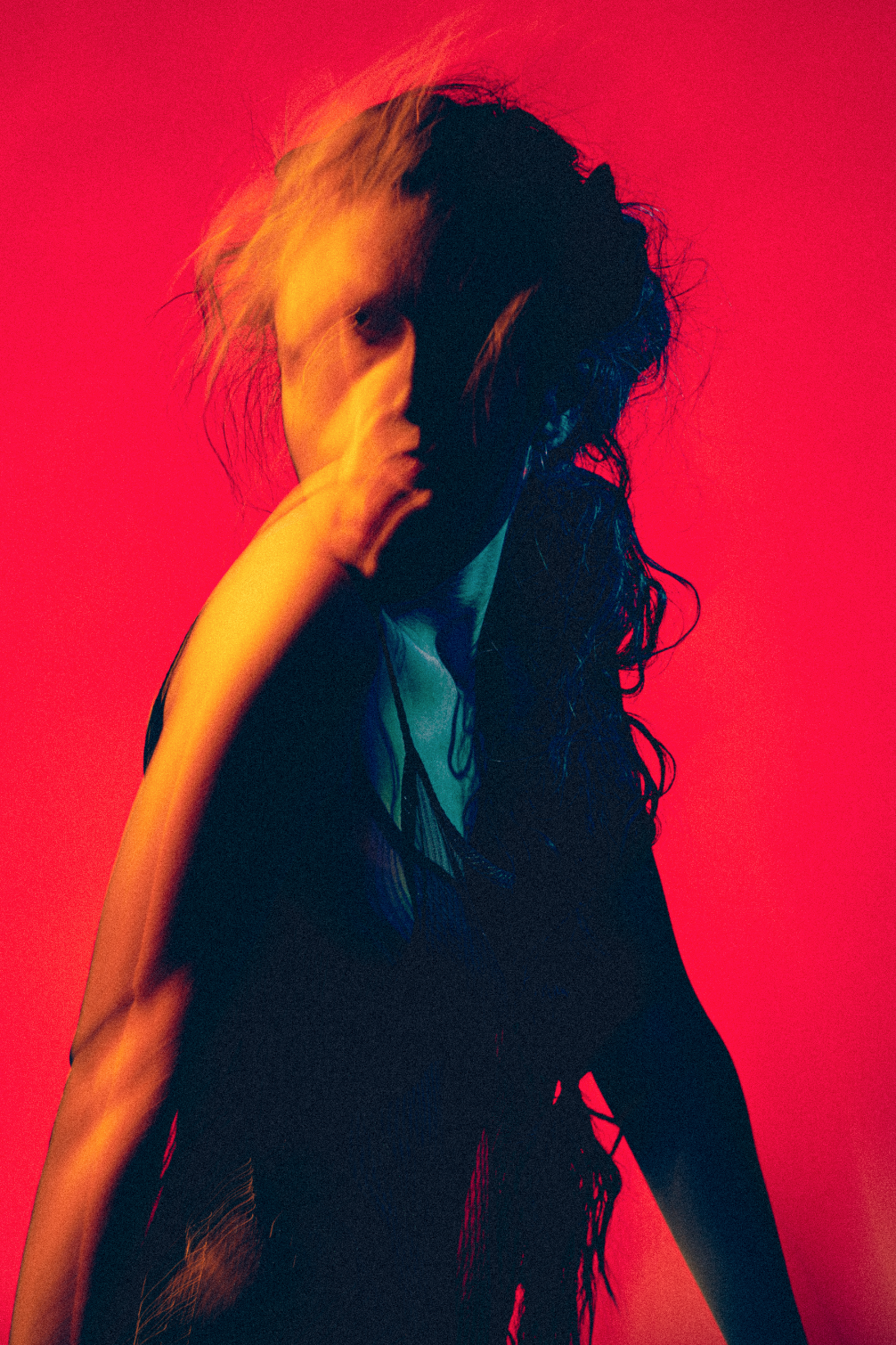
This was my fourth shoot with Rachel this year and she always brings so much emotion to every shoot (and pose). This was another one of my quickie shoot: two looks, thirty minutes. It never ceases to amazes just how much can come out of a mini session when everything is clicking…
This was my fourth shoot with Rachel this year and she always brings so much emotion to every shoot (and pose). This was another one of my quickie shoot: two looks, thirty minutes. It never ceases to amazes just how much can come out of a mini session when everything is clicking.
Though I’ve experimented with using slow shutter for years now, I’m lately changed up the way I use the technique. Before I would be the one moving, as I swiped my camera back and forth during the quarter-second exposure, creating painterly streaks of light. Now I sit still and direct my subject to make the movements, this time with a longer exposure of a half second or longer. My favorite moments are when I get the timing just right and capture a crisp profile mixed with ghostly streaks of movement. A balancing act between sharp and soft.
The other balance I was after was one of color temperature. I’ve been working with warmer color temperatures in many of my personal shoots this year— lots of reds, oranges, and yellows. In this shoot I decided to introduce a bit of cool blue to offset the warmth.
Slow Hands
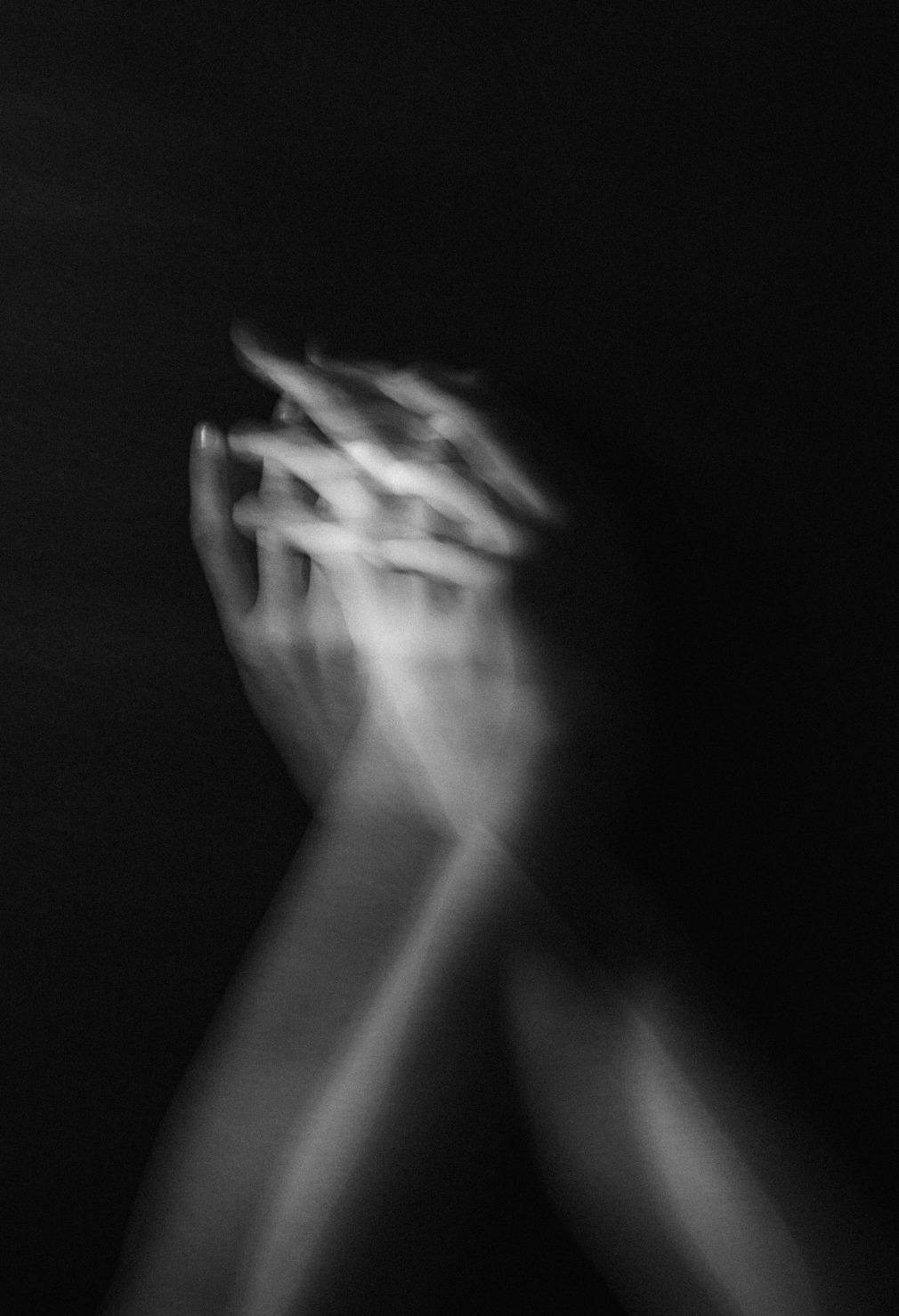
In my shoots I aspire to capture something beyond the outer appearance of my subject, and yet it can be quite hard to look past the specifics of a subjects appearance to get a glimpse of their soul. This is why I like to photograph hands. Not only do I find hands to be as expressive as faces, but they come with the added bonus of not being about any one person in particular. They are more universal in that way. As a viewer, you can more easily put yourself in the image, connecting the struggle or aspirations of a gesture.
I’ve been collaborating with Dani for years. She has appeared in all of my books, including the cover of Chroma. I’ve been on a slow-shutter kick lately and continued down that path with this shoot. Aside from shooting “traditional” portraits, I wanted to take portraits of her hands as well.
In my shoots I aspire to capture something beyond the outer appearance of my subject, and yet it can be quite hard to look past the specifics of a subjects appearance to get a glimpse of their soul. This is why I like to photograph hands. Not only do I find hands to be as expressive as faces, but they come with the added bonus of not being about any one person in particular. They are more universal in that way. As a viewer, you can more easily put yourself in the image, connecting with the struggle or aspirations in a gesture.
Strata VI
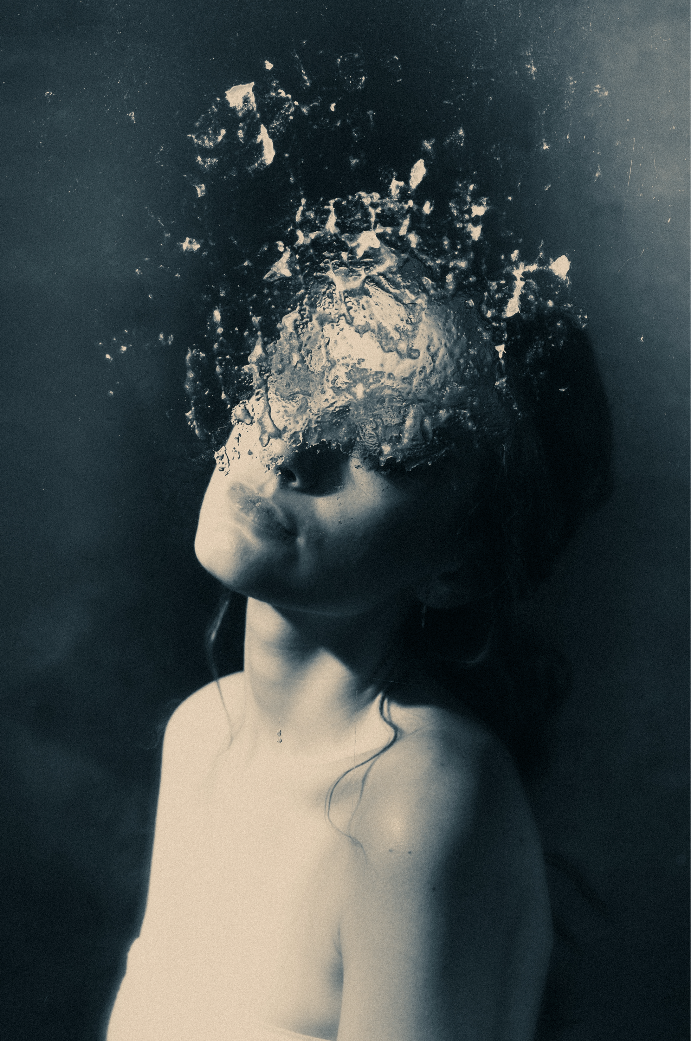
With these latest Strata portraits, I have started to do partial oil applications, leaving larger portions of the subject visible. I have used a number of application techniques such as blotting with my fingers, blotting with a paper towel, or smearing with a paper towel. I can’t deny how heavily these are influenced by the work of painter Henrik Uldalen. I also started giving the images a cyanotype treatment in post, which I really like. I think it gives the images an older feeling. My aim is for these portraits to not feel like they are from a specific time or of a specific person, but rather capturing a mood or feeling.
With these latest Strata portraits, I have started to return to partial oil applications, leaving larger portions of the subject visible. I have used a number of application techniques such as blotting with my fingers, blotting with a paper towel, or smearing with a paper towel. I can’t deny how heavily these are influenced by the work of painter Henrik Uldalen. I also started giving the images a cyanotype treatment in post, which I really like. I think it gives the images an older feeling. My aim is for these portraits to not feel like they are from a specific time or of a specific person, but rather capturing a mood or feeling.
Strata I
This past month I have begun working on a new series, the working title being Strata. I am dealing with obscuring my subject by shooting through a range of different materials. Though I am still early on in the exploration and not sure how exactly it will evolve, my goal is to capture the nature of humans at a spirit level, rather than make portraits of a specific person.
Latest Posts
- January 2019 1
- February 2019 5
- March 2019 5
- April 2019 4
- May 2019 8
- June 2019 8
- July 2019 8
- August 2019 6
- September 2019 8
- October 2019 7
- November 2019 6
- December 2019 8
- January 2020 5
- February 2020 6
- March 2020 7
- April 2020 8
- May 2020 5
- June 2020 4
- July 2020 5
- August 2020 7
- September 2020 8
- October 2020 8
- November 2020 6
- December 2020 6
- January 2021 6
- February 2021 7
- March 2021 6
- April 2021 5
- May 2021 6
- June 2021 6
- July 2021 6
- August 2021 3
- September 2021 5
- October 2021 4
- December 2021 3
- January 2022 2
- March 2022 2
- April 2022 3
- May 2022 4
- June 2022 1
- July 2022 2
- August 2022 4
- September 2022 6
- October 2022 1
- January 2023 2
- February 2023 1
- March 2023 4
- April 2023 1
- June 2023 2
- July 2023 1
- August 2023 2
- September 2023 4
- October 2023 5
- November 2023 3
- December 2023 1
- January 2024 3
- February 2024 2
- March 2024 8
- April 2024 5
- May 2024 2
- June 2024 2
- July 2024 2
- November 2024 2
- December 2024 1
- February 2025 1
- April 2025 1
- June 2025 1
- July 2025 1