Nick Fancher Nick Fancher

Getting Spooky with Rachel (Digital Pinhole)

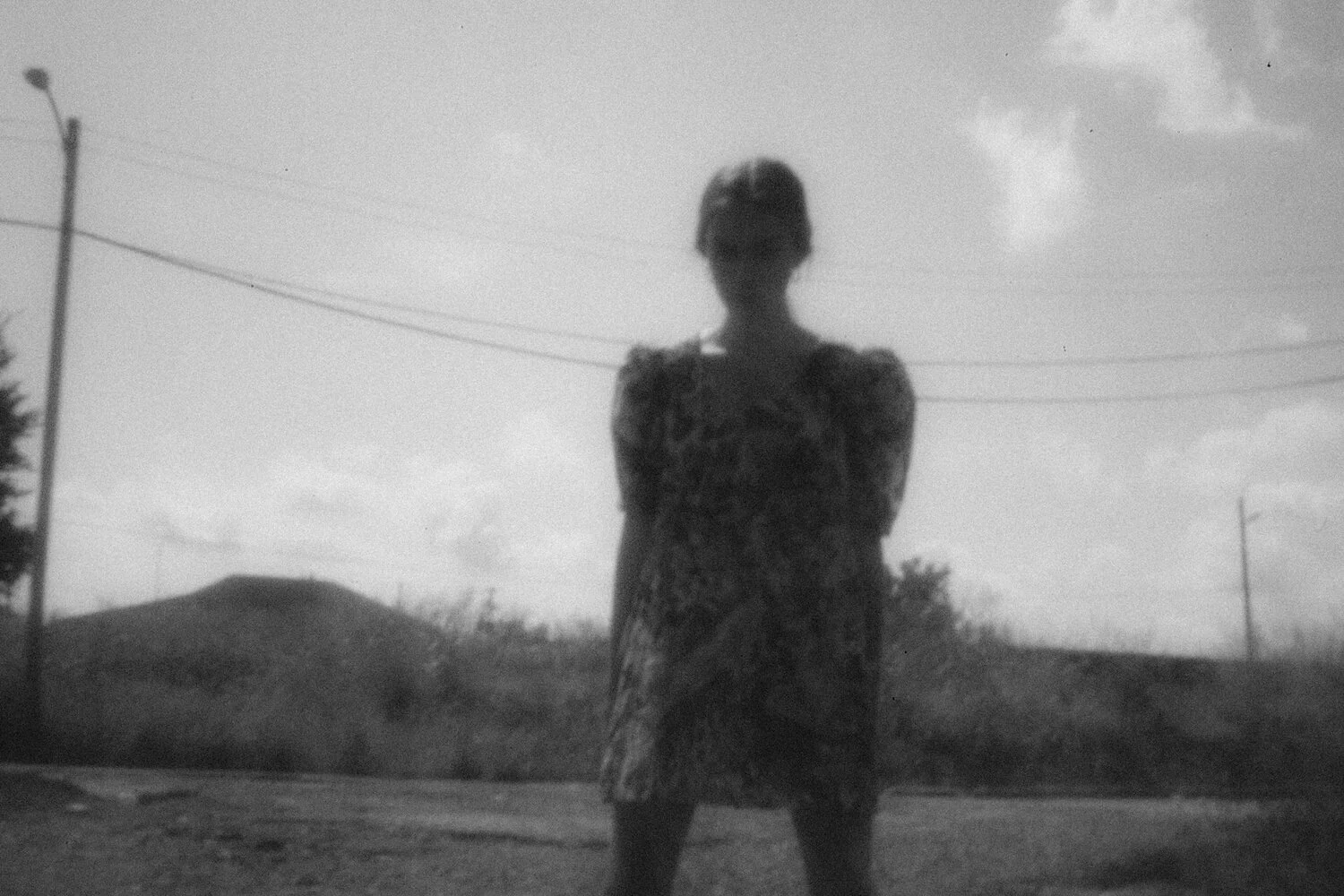
Last week I shot with frequent collaborator Rachel Luree and made a range of ghosty images, including some digital pinhole images. If you’re unfamiliar with pinhole photography, it’s essentially any light-tight object with photo sensitive material inside and a tiny hole which acts as the aperture. An entire room can then be a pinhole camera (see camera obscura). I’ve made pinhole cameras out of LEGO, oatmeal boxes, film canisters, and cigarette tins. While each iteration has offered unique results, exploring digital pinhole has been a quicker and easier experience by far.
Last week I shot with frequent collaborator Rachel Luree and made a range of ghosty images, including some digital pinhole images. If you’re unfamiliar with pinhole photography, it’s essentially any light-tight object with photo sensitive material inside and a tiny hole which acts as the aperture. An entire room can then be a pinhole camera (see camera obscura). I’ve made pinhole cameras out of LEGO, oatmeal boxes, film canisters, and cigarette tins. While each iteration has offered unique results, exploring digital pinhole has been a quicker and easier experience by far.

The pinhole lens (which I purchased on ebay) is just a body cap with a hole drilled out and a piece of metal glued in place, with a tiny pin-hole in the center. The pinhole diameter is 0.28mm, which translates roughly to f/157. It has three extension tubes (7mm, 14mm, 28mm) which can be used independently or all together to change the lens from a wide angle to a zoom. Using only body cap is the widest angle— likely a 20mm equivalent on the full frame sensor. Adding a the 7mm and 14mm extensions made it 50mm or so. Adding numbers all three extension tubes made it approximately 100mm. Note that the longer the lens is the more light is lost, meaning you have to compensate your exposure. My camera’s ISO maxes out at 32,000 and I obviously can’t open the aperture anymore, so my only option was to lower my shutter speed from 1/100 to 1/50. Considering we were shooting in full sunlight I’d need to use a camera with a higher ISO or bring a tripod if it was a cloudy day or shot indoors.

After wrapping the pinhole set we returned to my studio to explore creating ghosty images via a different technique. I had Rachel stand behind a silk scrim, which I lit and shot two different ways. The first was lit with an LED from the side of the model, which cast her shadow sideways onto the scrim. The second was lit with a strobe behind her, which cast her shadow forward onto the scrim. I then pulled down the white point in the tone curve in Lightroom to give the image a solarized look.

Read More
Nick Fancher Nick Fancher

Chelsea Wolfe: American Darkness Tour

I’ve been a fan of Chelsea Wolfe’s music since I first heard “Moses” off of her first album, nearly a decade ago. I first began collaborating with her in 2013 on her Unknown Rooms acoustic tour, and we’ve since shot together eight times. Whenever she heads out on a tour I make it a point to not only catch her show but also squeeze in a quick shoot. This past month I drove up to Detroit to catch her American Darkness tour at Smalls for some conversation, music, and of course photos…

I’ve been a fan of Chelsea Wolfe’s music since I first heard “Moses” off of her first album, nearly a decade ago. I first began collaborating with her in 2013 on her Unknown Rooms acoustic tour, and we’ve since shot together eight times. Whenever she heads out on a tour I make it a point to not only catch her show but also squeeze in a quick shoot. This past month I drove up to Detroit to catch her American Darkness tour at Small’s for some conversation, music, and of course photos.

Chelsea had spotted some trees growing through the barbed wire fence behind the venue and asked to shoot there for the first look. I started off by shooting a few digital pinhole images before opting for a low, wide angle lens. In Lightroom I decided to give this set a duotone treatment with solarized orange shadows. I liked how it gives the appearance of a fire burning from within.

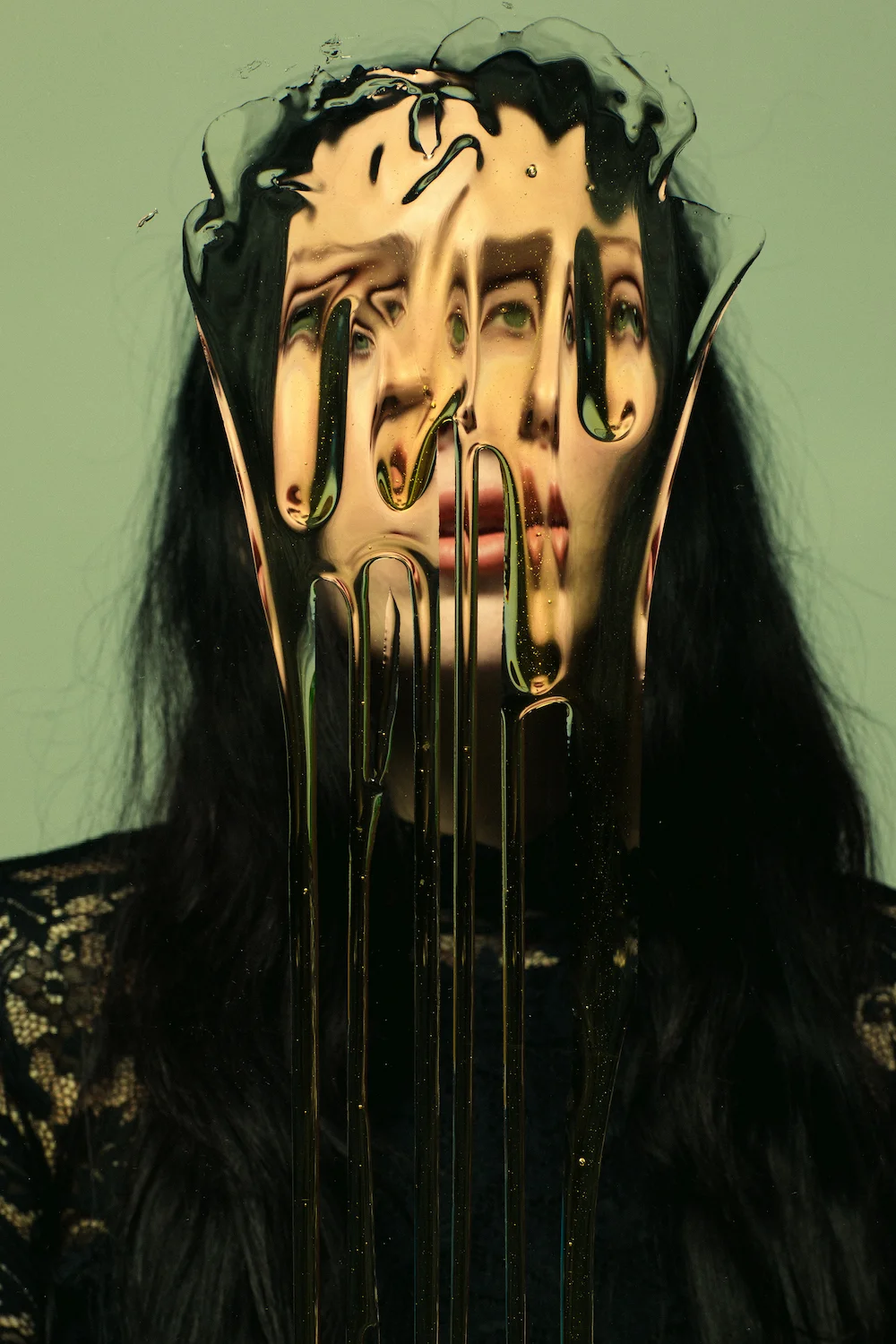
If you’ve been following my blog for any amount of time you know that I typically go into a shoot with little to no idea of what I want to do, conceptually speaking. This time I decided to change things up and do my homework. Though I had already listened to her latest album (The Birth of Violence) several times, I revisited it looking for themes to incorporate into the session. One of her songs, “When Anger Turns to Honey”, worked perfectly with my Strata honey explorations.

Putting my Studio Anywhere ethos to work I quickly set up a makeshift studio in the green room (see below). With one light, some plexiglass and of course, honey, and I was up and running. My favorite thing about honey is how it refracts light. In post I decided to give the image a green wash (in the vein of Dan Winters) in order to complement the golden hue of the honey.

Finally I shot some warped reflections in mylar. I’ve been experimenting with crumpling or cutting it to warp the reflection. There really are infinite possibilities when working with the material. These type of experiments are precisely the type of images that we’ll be exploring in my Creative Portraiture Workshop tour, which is hitting Columbus, New York, and London in 2020. For more info go to https://www.nickfancher.com/workshops. The early bird rate is in effect for two more weeks.

Read More